Beetroot Greens
Taste
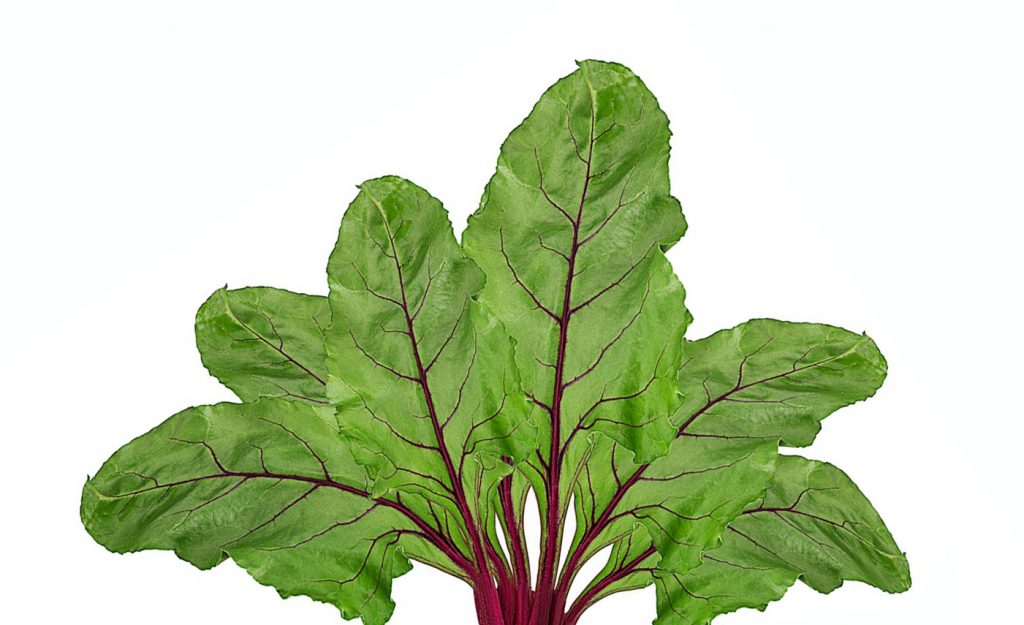
A good alternative to using chard, beet greens have a slightly bitter taste but are sweeter after quick boiling.
Eat
Fresh young leaves raw or larger leaves cooked as a replacement to spinach or chard.
Health & Nutrition
Most nutrient rich part of the plant, rich in iron, calcium, magnesium, copper, potassium, manganese, and vitamins A, C, B2, and E. A very good source of the carotenoids, lutein and beta carotene which support eye health. 1 cup of greens contains 4 g of your daily fibre intake. They also contain a good amount of protein.
Buying tips
Go for young fresh green beet leaves that will be found on smaller beetroots. Avoid wilting older leaves as these are a lot tougher and bitter.
Storage tips
Beet greens are best eaten within a few days of picking but will keep longer if removed from the roots and stored in an airtight bag in the fridge.
Cooking tips
Quick boil: Place rinsed leaves in a pan of boiling water for 1 minute only with the lid off. This high heat minimal cooking duration method reduces the oxalic acid content and reduces the bitter taste without leaching the nutrients of longer cooking methods. Add to curries, lentils, frittatas, lasagnes.
Sautéed: Leave the toughest larger old leaves. Layer up the delicate fresher leaves, roll in to a cylinder and slice finely with a sharp knife. Sauté in a pan with oil, salt and garlic for 5-10 minutes on a low heat. Larger leaves need to be cooked a little longer than chard.
Raw: Small tender leaves can be eaten raw in salads or added to soups and stews at the end of cooking.
Waste reduction tips
Always save the beet green tops as they are extremely nutrient dense and are a good alternative to other leafy greens. Compost the toughest larger old leaves.
Related Recipes