Chard
Taste
Bitter, spinach.
Eat
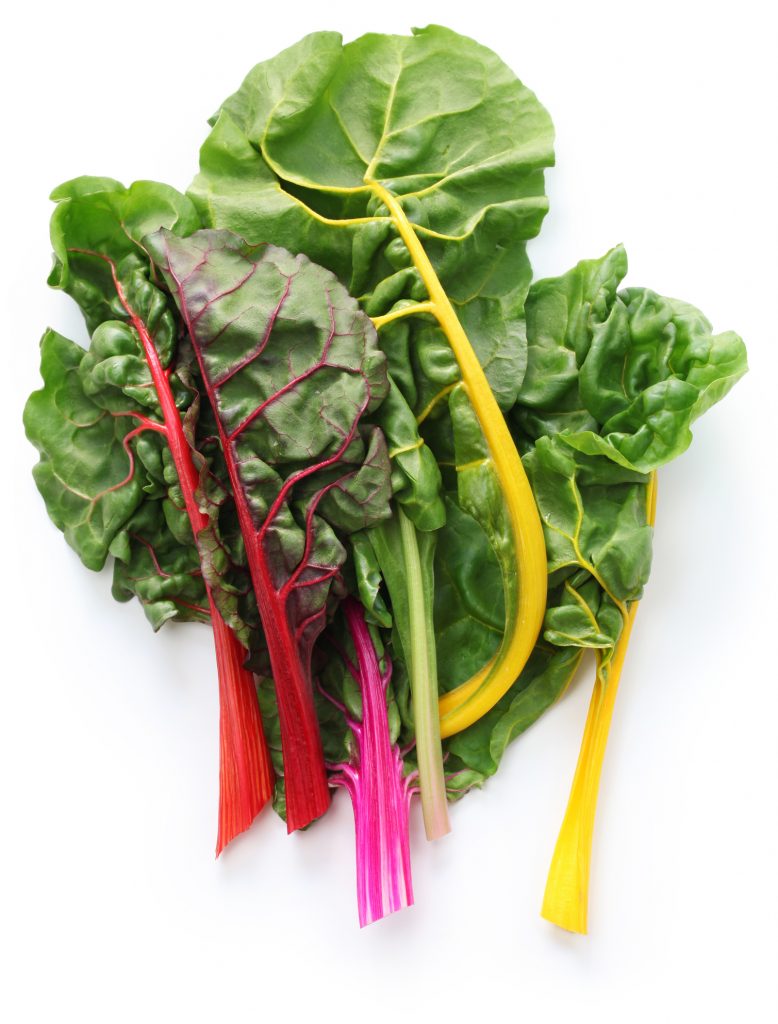
Leaf: the leaves come in a variety of colours and can be used as a good substitute for spinach.
Stalk: the stalks are edible and quite robust so you will need to cook these first.
Health & Nutrition
Chard is an excellent source of minerals and flavonoids and ranks as a very nutrient dense food overall. It is a good source of vitamin K, A, C, as well as good amounts of fibre for supporting digestive health. The incredible range of colours that chard comes in is beneficial for supporting a diverse rainbow diet rich in antioxidants. A diverse range of different coloured fruit and vegetables supports the growth of beneficial bacteria in the gut.
Buying tips
Choose chard from a range of rainbow of colours from red to pink to green to white to orange. Leaves should be vivid and vibrant in colour, fresh and firm. Avoid older wilting leaves that will have lost some of their nutritional content.
Storage tips
Store in a sealed plastic bag to retain freshness and prevent wilting.
Cooking tips
Prep:
Soak leaves and stems in a bowl of water to remove soil or rinse thoroughly.
Raw: Young chard leaves are delicious added into a seasonal salad.
Blanch: Blanch stems first and leaves for last few minutes in boiling salted water for 5-10 minutes until tender. Drain and use in other dishes such as dips, gratin, legume salads, humous, pies, lasagne, galettes.
Braise: Braised chard tastes delicious but you will loose the beautiful colour. Slice or dice the stems and roughly chop the leaves. Add to a pan with oil or butter and spices of choice. Add the chard and enough stock to just cover the veg. simmer over a low heat covered with a lid for 15 mins until tender.
Sautee: Sautee in a pan with oil, butter, or water. Add sliced stems first as these are more robust and take longer to cook. Garlic, salt, and lemon juice are a nice addition.
Waste reduction tips
Use any leftover stems in veg stocks, compost, stir-fries. You can also freeze them for later use.
Related Recipes