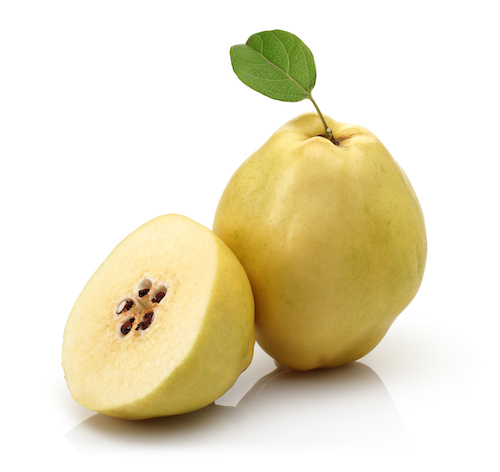
Astringent, sour, tart, perfumed, apple, pear, rose, honey.
Pairs well with sweet or savoury dishes. Red wine, chestnuts, chard, apple, pear, hazelnuts, venison, cod, partridge, cheese, whisky, thyme, clove, cinnamon, anise, vanilla.
Eat
Flesh and skin. Quince must be cooked as they are very woody.
Health & Nutrition
A good source of fibre, potassium, rutin, pectin, and vitamin C. it contains small amounts of copper and iron.
When cooked the flesh turns pinky/red and is rich in antioxidants called anthocyanins.
A good source of tannins as you also find in tea, providing antioxidant and anti-inflammatory effects.
Buying tips
Choose quince that are firm and free from brown spots. Thy should have a wonderful aroma that is unmatched by apples and pears.
Storage tips
Store at room temperature of in the fridge.
Cooking tips
Prep:
It is better to cook quince as it is very astringent, hard, and tart. The beautiful perfumed flavour is concentrated in the skin so don’t peel. Grate or finely chop and use in tarts, cakes, muffins, crumbles.
Poached: Slice the quince, removing seeds and core, and place in a pot of cold water until just covered. Add your spices and then bring to the boil, reduce the heat and then simmer until soft. (around 40-50 mins) Enjoy warm or cold. Add to porridge, yoghurt, tarts, meat.
Slow cook: Quince sweetens and becomes more tender the longer you cook it, and caramelised quince is a treat. Bake in the oven at 160 C for around 3 hours. Place in a baking dish with a lid or cover with baking parchment. Alternatively place in a slow cooker and cook for 6 hours until tender and a deep red colour.
Waste reduction tips
If you have a glut of quinces combine with apples and turn into chutney or jam or jelly.