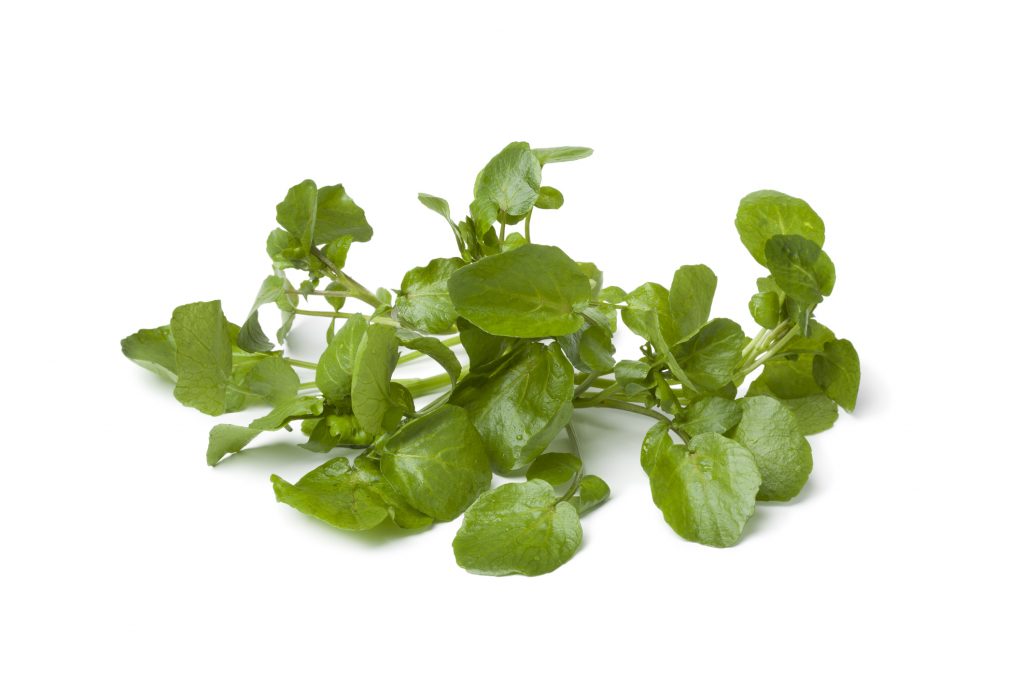
Watercress
Taste
Bitter, peppery, mustard, kale, nasturtium.
Eat
Leaves and stems.
Health & Nutrition
Watercress is a very good source of iron, vitamin C, vitamin A, calcium, nitrates, and folate. A member of the cruciferous family it is rich in phytochemical antioxidants including glucosinolates, flavanoids, and lutein. Watercress also contains essential omega 3 fatty acids as do many other leaft greens.
Buying tips
Choose fresh dark green leaves that aren’t wilting. Avoid leaves that are yellowing or wilting.
Storage tips
Watercress does not store well so keep in an airtight bag or container in the fridge and use within a few days.
Cooking tips
Prep:
Wash the leaves and stems thoroughly by soaking a bowl of cold water as it grows in freshwater and so can harbour parasites and pathogens.
Raw: Chop roughly or tear in to bite size pieces and use in salads, smoothies, dips. Use as you would spinach but with an added mustardy zingy kick.
Boil/simmer: Watercress is excellent added to dishes towards the end of cooking such as soups, stews, curries, risotto, mash.
Waste reduction tips
Use up any leftover watercress in soups/stocks.
Related Recipes